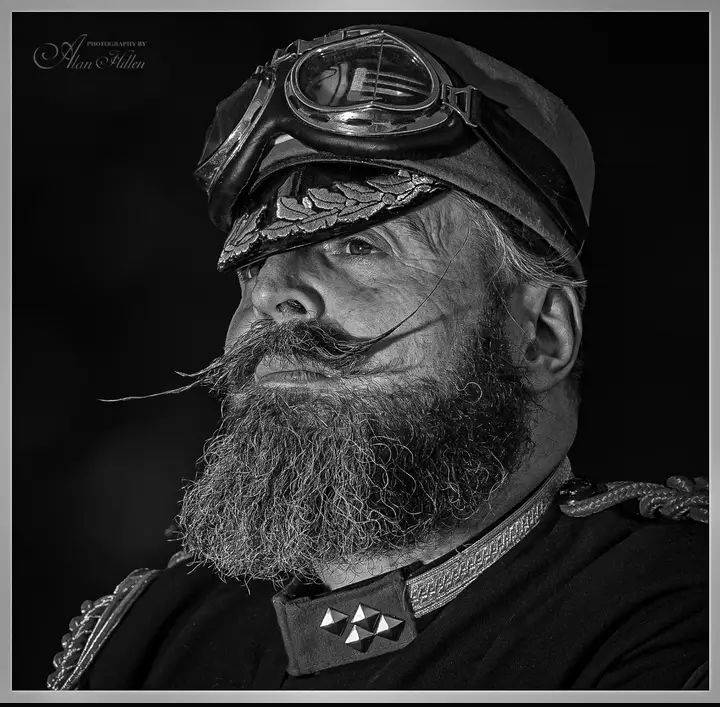
The annual church picnic is usually an odd affair. We all know there are going to be sermons and that Reverend Davies will preach about the virtues of sobriety, temperance and moderation. Picnic goers are divided into several camps. There are the people who wholeheartedly agree with him, and who will willingly eat dry biscuits as they do so. Then there are the midgrounders, typified by Mrs Beaten – people who have brought along indulgences like scones, and jam-like substances but who nonetheless are willing to listen quietly, then sing enthusiastically. Furthermore, they sing enthusiastically at the points when Reverend Davies wishes them to sing and make their best attempts at the tunes he had in mind.
Then there’s everyone else. The ones who will try and spike the soothing tea with mushrooms. The ones who are mostly there in the hopes that Reverend Davies accidentally summons Satan out of the ocean. Again. Church picnics have a knack for attracting drama and chaos, so if you have the stomach for the sermons they can be rather entertaining as a spectator sport.
Tish Toglet has been the antagonist in chief for the counter-picnic for some years now. Rumour has it she is the one who managed to get Mrs Beaten so drunk last year that she did an entirely unseemly dance and flashed her bloomers before passing out. As for how she woke up covered in jam is of course anyone’s guess. The ultimate goal for those who go along only to disrupt the picnic, is to get Reverend Davies to do something funny. If he’s capable of laughter, no one has ever heard him do it, but he is certainly equal to causing great amusement.
The year a fish somehow got into his trousers was rather memorable on that score. Then there was the year we all had letters on our picnic blankets and spelled out something rude that only he could see when he stood up to do his sermon. This year a few of us are planning to take along phallic objects and sit with them in our laps and see if that throws him at all.
So if you’re coming to the picnic, think carefully about who to sit with. Do you want to be next to Herb Chevin and his offensively arid biscuits? Do you want to be close enough to Mrs Beaten to enjoy the full power of her singing? Or are you going to come and sit with Tish’s little party? Maybe stick some horns on your hat if you do.
There was something extra magical about the circular grove upon Urthappel Hill. Many things in Hopeless Maine were magical, so most magical things did not tend to stand out in the way that they would on the mainland. But this circle of trees was quietly striking to those who knew the ways. A perfect circle of trees, exactly on top of the hill, with no other trees for quite some distance.
No stranger to magic and wyrdling ways, Lyssa loved this place. Almost every other day she would find some excuse to be out here, purposely diverting from the quickest route to take in the hill. Some days she would sit at the bottom of one of the bigger trees reading a book. Other days she would lie in the middle of the grove looking up at the circular gap in the leaves to the sky beyond. A few times she would take some food in a basket and eat a relaxed lunch in the grove. It always seemed so peaceful to her. Welcoming. She once brought a friend to the hill, but they wouldn’t step near the top, and ran away from her when Lyssa said they were being silly.
Then one evening, Lyssa found herself out later than she expected. The sun was almost down and it cast a mournful glow across the landscape. Walking a well-known path, Lyssa realised it would run close to the hill, so she left the path and set out across the field to reach it.
Have you ever noticed how everything looks different at night? Even the familiar can look strange and unknown. Places that are one way by day, are entirely another when the sun goes down. The hill seemed less welcoming now. A blackness wrapped itself around the grove of trees, a blackness that failed to dissipate as Lyssa drew nearer. Everything was the same only different. Despite the foreboding that now enveloped the place, Lyssa was not afraid. She was not lacking in magic, and this felt more like a warning than a threat – something to scare away the casual interloper. Her curiosity was burning inside her now and she sat down within sight of the grove, but not inside it. Something held her back – a sense that she was here tonight to witness rather than participate.
She was there for a while when she saw the first small lights in the distance, bobbing and weaving. They appeared to be clustered in small groups and were not particularly bright. As they came closer to the grove, she saw them for what they were, night potatoes on the move. She had heard stories and knew that they moved around, but this was the first time she had witnessed such a parade of the creatures. She kept still and silent – she was good at this, something she had had to perfect in the past. In any event they did not seem to notice her.
There was quite a number of the creatures, and they all moved together until they reached the first tree, whereupon they split up – each going to a separate trunk. Lyssa was intrigued – what could they be doing? As if to answer, each night potato started climbing their respective tree. It was clearly a challenging undertaking for them, tendrils barely equal to the task of ascending. Indeed a few fell almost straight away. After which they seemed to shake themselves and then started to climb again. Lyssa was fascinated. Why were they climbing the trees? What could they be doing? She sat for hours whilst the night potatoes continued their seemingly impossible mission. Many had reached the upper branches of the trees and were making their way along boughs that overhung the centre of the grove. Some were still struggling with their climb up the main trunk, and a few were on the ground, seemingly despondent that they had fallen off again.
A small ribbon of red light appeared on the horizon and Lyssa realised she had been there all night and that dawn was about to break. She looked up at the grove – about half of the night potatoes were at the end of branches with more still climbing the trees. Suddenly they all stopped. They all turned as one towards the distant horizon, seemingly sensing the dawn. They all turned back, and again, as one, jumped. Lyssa fell back from her sitting position – she was not expecting this. Why did they jump? What were they trying to achieve?
Many of the potatoes did not survive the fall and moved no longer. Some were carried away by their comrades who had not fallen so far, or were lucky.
And so it came to be that Lyssa became somewhat obsessed with the night potatoes mysterious ritual. It seemed to happen roughly every two weeks, coinciding with half or full moons. She stopped visiting the grove in the daytime – that no longer held any excitement for her. Now, she just came to see the night potatoes climb.
Many times, she saw them climb and many times she saw them fall. She wondered whether she should help in some way, or intervene. She thought about carving steps into the trunks, but that seemed unnatural and she knew the tree spirits would be unhappy with her, besides, that was not her way. She had a strong sense that this was something the night potatoes would have to do for themselves. By now she had realised that they didn’t seem to care that she was there, or didn’t even sense she was there, as she was able to enter the grove and observe them close up.
On one occasion a large proportion of the potatoes managed to complete the climb. At the end of the branches they held out their tendrils – the branches were just close enough that they could hold each other and create a circle – albeit with a few gaps. Just before dawn, they all jumped together – holding tendrils as they fell. Seeing this, Lyssa gasped. What was it all about? She had been standing by one of the bigger trees and knelt down to get a better look at the nearest potatoes. Most were not moving, whilst some were already limping away. A couple of the more mobile ones seemed to suddenly notice her and scuttled away to the nearest patch of darkness. A small one seemed to panic on seeing her and dug itself into the ground.
It was only a few weeks later that Lyssa experienced her transmutation. She had been standing in the grove watching the latest group of night potatoes attempt the circle. They seemed to be doing better than before. At this point there were no stragglers – all were making the climb. Lyssa found herself ridiculously excited – what if they all jumped together? What would happen? She found herself turning around to check on all the participants in the night’s ritual. Higher and higher they climbed. Then out onto the limbs of the trees – moving towards the centre of the grove along narrower and narrower branches. Lyssa was spinning faster now, trying to see when the circle would be closed. Tendrils were reaching out – seeking their potato pals. Laughing, and almost dancing, Lyssa looked up. Before she had a chance to move the circle was complete and the night potatoes had jumped.
There were a few moments when Lyssa was not sure what had happened, but then she felt tendrils in her hair, her ears, her mouth and her nostrils. Strangely, she was not afraid, not weirded out by this, but accepted it. There was a ring of night potatoes around her head, and she could see more night potatoes entering the grove. She felt compelled to pick up a solid branch lying on the ground – it became her staff. A few of the bigger potatoes climbed the staff and settled upon the top. She sensed a calling, a message, a title. The night potatoes around her head withdrew and made their way to the ground. She stood in the centre of the grove, hundreds of Night Potatoes all around. This was her coronation. She had become The Queen of the Night Potatoes.
Lady Margaret D’Avening, the ghostly White Lady, doomed to haunt the flushing privy of The Squid and Teapot, placed her head on the washstand and said, in conversational tone,
“Do you realise, Ignatius, that we’re only a week away from Midsummer’s Day?”
Father Stamage, the ghostly Jesuit, frowned. She did not usually refer to him by his Christian name. Something was afoot.
“That’s not much good to us, is it?” he said, somewhat snappily. “One season is very much like another on this confounded island, and besides, as we’re both indisputably dead, I can’t see either of us being in the business of getting a tan anytime soon, can you?”
“Tanning the skin is vulgar in the extreme,” announced Lady Margaret, haughtily, “but I was drawing your attention to the imminence of midsummer for reasons far more serious than besporting yourself in unbecoming, not to say inadvisable, beachwear.”
“I never have!” protested the priest, indignantly. “But tell me, what is this serious matter? I’m dying to know.”
It was not, maybe, the best choice of words, under the circumstances.
“The coming of the Psychopomp,” she said. “Once, every hundred years, he, she or it will turn up on Midsummer’s Day without fail, and next week will be it.”
“You’ve lost me,” said Stamage. “Who or what is a Psychopomp?”
“You don’t know? The Psychopomp is the entity who will escort you to Purgatory.”
“Purgatory? I don’t understand. I was under the impression that this place is Purgatory.”
“I can see why you might think that, but it is not” chuckled Lady Margaret. “However, you being a man of the cloth will be seen as being fair game for the undivided attention of the Psychopomp.”
“What about you? Aren’t you coming too?” asked Stamage, taken aback.
The head sitting on the washstand laughed heartily, while Lady Margaret’s body, some three feet away, shook with mirth.
“They gave up on me, and all the other old ghosts on the island, ages ago. For good or ill, we’re stuck here for eternity. I am very much afraid that you alone will be grabbed this year, just you mark my words.”
“But.. but what about Miss Calder and Miss Toadsmoor, up at the orphanage? They haven’t been around as ghosts for very long. Won’t the Psychothingy be after them too?”
“They were Protestants when they were alive,” replied Lady Margaret. “And Protestants don’t believe in Purgatory.”
Had Father Stamage been in receipt of breath, he would have sworn under it. As it was, he uttered a few unpriestly oaths and disappeared sulkily into the bar. A few seconds later he returned, a worried look upon his face.
“You called this Psycho-whatnot he she or it. What did you mean?” he asked.
There was a degree of nervousness in his tone.
“Well, the last time we had a visit, it was from the Aztec dog-headed god, Xolotl. He was a bit disconcerting. The time before that, it was Anubis. I liked him, I must admit. There’s just something about a jackal-headed deity that I find strangely attractive.”
“Anubis? Xolotl? These are all a bit pagan for my taste,” said Stamage. “And do these things always originate from the canine family? I like dogs well enough but… I don’t want to be taking one for a walk to Purgatory.”
“By what I have seen in the past, you won’t be walking, that’s for sure,” laughed Lady Margaret, unkindly.
Father Stamage, ashen-faced, even for a ghost, said nothing; he drifted back into the bar, in search of Philomena Bucket.
The relationship between Philomena Bucket and Father Stamage had always been prickly, both before and after the priest’s untimely death at the hands of Obadiah Hyde, The Phantom Mad Parson of Chapel Rock (as related in the tale ‘The Exorcist’). While both parties had always been polite to each other, Philomena’s low opinion of organised religion, coupled with Stamage’s fear and loathing of anything to do with witches or witchcraft (as personified by Philomena and her spectral grandmother) had been, so far, an insurmountable block to their forging anything resembling a cosy bond. Now, however, Father Stamage suddenly realised just how much he really wanted to stick around and haunt The Squid and Teapot, and not be exiled to Purgatory. It was time to eat the proverbial Humble Pie* and go, Capello Romano in hand, to avail himself of the mercy and wisdom of the formidable Bucket women. He knew that if he was to be spared, there would be none better on his side than the ghost of Granny Bucket.
“Now, let me get this right, Father Ignatius,” said Granny Bucket, enjoying herself immensely. “You’re telling me that you have at last seen the error of your ways and you’ve decided to embrace the Old Religion… the Pagan Path?”
“I did not say that, Mistress Bucket, I merely asked…”
“Ah. I’m pulling your leg, you great Lummox. I’ll help if I can, but tell me, what does a good Catholic lad like yourself have to fear from the afterlife?”
Ignatius Stamage looked uncomfortable.
“To be honest, Mistress Bucket…”
“Call me Granny. Everybody does.”
“To be honest… Granny… I really thought this island to be Purgatory, and that I am paying penance. Now I find that I’m about to be dragged to somewhere even more ghastly by some dog-headed demon. Are there no Christian psychopomps?“
“They draw straws for the job,” said Granny. “Somehow your lot always arrange things so that one of the dog-headed brigade ends up drawing the short straw. It’s no more than I’d expect. Anyway, old Anubis is alright. I’m not so sure about the other fella, though.”
“I fully expected that, by now, I would have been raised to the glory of heaven by Saint Michael himself,” said Father Stamage, miserably. “As it is, nothing seems to be turning out in the way that I thought it would.”
“Well, in the words of a great and famous sage, also called Michael, I believe,” said Granny, “you can’t always get what you want.”
“But can you help? Please?”
“I’ll think of something. Just give me a few days.”
“Thank you,” said the priest. “But don’t forget, the clock is ticking.”
Granny gave him a withering look, and disappeared into the ether.
You cannot pressurise Granny. It probably had not been the wisest thing to say.
To be continued…
*Author’s note: Humble pie, or more correctly, umble pie, was originally a pie made from deer offal. It was considered to be an inferior food and was only consumed by the lower-classes. Although the words umble and humble have absolutely no etymological connection, someone, somewhere must once have thought that ‘eating humble pie’ sounded a lot better than just saying ‘bootlicking’
They weren’t real spoons, they were damaged mechanical parts that had been torn from the guts of some ill-fated ship. But they looked like spoons. Really big spoons. There is something that happens inside the ponderous mind of a spoonwalker when they encounter something they think is a spoon, and everyone likes a big one, even if they can’t handle it.
Of course, the bigger the spoon is, the heavier it is, and the harder it is to lift, and even if you can get it upright actually walking with a big heavy spoon takes an insane amount of effort.
But they were such very big spoons.
And so it was that the little spoonwalker puffed and panted, swore and sweated and struggled… for an absolutely unreasonable amount of time. No doubt it was all the straining that resulted in the little spikes pushing up out of his head. Normally sponwalkers aren’t spikey. Normally their eyes do not gleam with an infernal light.
But these were very big spoons, and very big spoons can have implications, and consequences.
Fate rewards the bold and all that kind of positivity cliche. Our little spoonwalker grew in might and muscle. He rose, on that which looked like spoons, but was not really spoons, and he strode out into the world, towering over other spoonwalkers, over chickens and very modestly sized plants. Other spoonwalkers quailed before him, and the chickens hesitated to try and eat him, and the modestly sized plants trembled at his passing.
Perhaps it was the scale of the effort that drove him mad, or the intoxication of walking on such very large spoons. Perhaps he was inspired – as so many human residents are – to try and escape from this island. Whatever the reasons, Spoonzilla strode out into the sea, the water boiling around him as he went. He disappeared under the waves as the water churned and steamed.
Those amongst us who believe in sequels are pretty sure that won’t be the end of the matter.
Marcus is one of those rare people who successfully moved to the island by falling out of the sky. Of course we get a few people every year who move permanently to the island by falling out of the sky in a way that might be described as less successful. Unless of course you consider attaining a jam-like appearance to be the height of success.
Marcus came to us during a blood rain. It’s rare in a blood rain to get anything as large as a whole person. Feathers of course are normal, along with frogs, and pieces of things that might have been where all the blood came from. As yet, no one has been able to get Marcus to explain how this happened, but the odds are he doesn’t really know. People who arrive here by more ordinary means are often confused and disorientated by the experience.
Our expert gossips have surmised – based on how Marcus was dressed when we found him – that he might have been some kind of aeronaut in his previous life. He may therefore have been up in the sky for some other purpose and simply collided with whatever was causing the blood rain. There was no sign of an air balloon or other contraption when we found him, but we can’t rule out that having been eaten. The sky can be hungry.
I think that I have previously mentioned in these tales the existence of the Hopeless, Maine, Museum. It is a small and unimposing building, housing a selection of artefacts which have invariably proved to be of only slight interest to most of its infrequent visitors. The earliest exhibits, comprising of bits of charred bone and a small, badly dented, cauldron, date from the period when a flotilla of awe-inspiring dragon ships arrived, noisily disgorging several bands of fierce Viking warriors and their extended families. With characteristic Nordic efficiency, the invading Danes took little time in establishing a thriving settlement upon the island. This, of course, happened in the time before the all-pervading fog and feeling of gloom and despondency completely enveloped Hopeless’ rocky shores.
Most other items in the museum are representative of the early days of the current population, when the founding families brought their own culture to what was, by then, a less than hospitable environment. Pride of place goes to the original lidded-bucket, used by Killigrew O’Stoat, the very first Night-Soil Man. A family bible bearing the name of Gruffyd Davies comes a close second in popularity, but this is because both the O’Stoat and Davies clans are still very much a presence on the island. Strangely, the most colourful and interesting exhibit lies in a wooden chest, stowed away for no other reason than to keep it safe from the attentions of clothes-moths, thieves and, with outrageous optimism, sunlight. So, you may ask, what can this fragile and valuable wonder be?
Quite simply, it is a cherry-red uniform frock coat, resplendent with gold double buttons and a black collar and cuffs. Sitting on top of it is an imposing black top-hat.
“What sort of soldier, do you reckon wore this?” Seth Washwell asked Reggie Upton.
Seth had been the key-holder and custodian of the museum for years. He was delighted that, after more than a decade of indifference, someone at last wanted to see the various specimens on display.
Reggie peered at the long red jacket that Seth held aloft, then at the top-hat, which he had placed reverently on a chair.
“None that I can name,” replied Reggie, scratching his head, “and I can’t think of any regiment unlucky enough to have to wear toppers. It reminds me, however, of the get-up of a chap whom I once knew, a fellow who rejoiced in the name of James Moses Nobbs. He was quite old when we met, and had been a Royal Mail Coach Guard. I seem to recall that he wore a uniform jacket very much like the one that you’re holding up.”
“Darn, you got it in one,” growled Seth. “I guess you might be interested in reading this.”
Seth took a leather-bound notebook from the depths of the chest and handed it to Reggie. Inscribed on the inside page were the words ‘This journal is the property of Tom Long, Postman.’
“This is fascinating stuff,” said Reggie, brandishing the journal at Philomena Bucket, later that evening. “This chap Long came over to Hopeless years ago, with the first wave of O’Stoats, Davieses, Chevins et cetera, et cetera. Apparently he set up a service called Tom Long’s Post. It seems that he had been a Mail Coach Guard back in Blighty, and dashed well kept the uniform.”
“Blighty?” frowned Philomena.
“It’s how the Indians – Bengalis and suchlike – used to refer to England. The actual word they used was Vilayati, I believe, but something was lost in translation along the way. Strangely, it soon caught on with the army, and England has been Blighty ever since.”
“What a fund of information Reggie is,” Philomena reflected to herself. “And what a pity that most of it is totally useless.”
“Anyway, according to his journal, Tom Long set up a postal service on the island, and would dress up in his uniform and transport letters and parcels hither and thither.”
“How did he manage that?” asked Philomena. “I can’t imagine that it was any safer travelling around then than it is now. And wearing that red jacket would have been as good as saying ‘come and get it’ and waving a menu.”
“Ah, but he was crafty,” said Reggie, “and delivered his letters at night, using Killigrew, the Night-Soil Man, as protection… and before you ask, he got away with it because Tom Long was just like me, and had no sense of smell whatsoever.”
A familiar glint suddenly sparkled in Reggie’s eyes.
“By Jove, that gives me an idea,” he said, twirling his moustache.
“I know exactly what you’re going to say, and for a man of your years I don’t think it would be wise,” said Philomena, sternly, adding, “besides, I would not have thought that there was much need for a postal service on the island these days.”
“Nonsense,” said Reggie, “I am sure that if I asked around someone would want a delivery made, now and then. And it would make me feel that I was contributing something to the community.”
“Not to mention having the chance of getting back into a uniform again,” muttered Philomena, cynically.
“The thought had never entered my head,” protested Reggie, secretly crossing his fingers behind his back.
“Well, I must admit, you do look dashing,” said Philomena, the following afternoon, as Reggie pirouetted around the room in the postman’s livery.
“How did you manage to persuade Seth to lend you the uniform?”
“He was happy for me to wear it, providing I don’t get it covered in blood.” he replied. “And he’s asked me to take a package over to ‘The Crow’.”
“Just you be careful going there,” warned Philomena. “There are some strange folk who get in ‘The Crow’.”
“Unlike the strange folk who get in ‘The Squid’,” thought Reggie, but wisely said nothing.
“… So you see, because of their red jackets, postmen were given the nickname ‘Robins’, and that’s why you find robins on Christmas cards; they represent the postman who delivers it,” said Reggie.
“I’ve never received a Christmas card,” said Rhys Cranham.
There was a sadness in the Night-Soil Man’s voice which Reggie immediately detected.
“Then I shall rectify that as soon as December comes around,” he promised.
The two were preparing to leave the House at Poo Corner and start the Night-Soil Man’s round, which tonight would include visiting ‘The Crow’. Rhys had his bucket strapped firmly to his back, and Reggie carried the small package that Seth had entrusted to him.
They had only walked a few hundred yards when Drury came rattling out of the bushes, making an angry beeline for Reggie. Some primeval instinct, common to virtually every dog who has ever lived, had stirred within him, when sensing the presence of a postman.
“Steady on old chap,” cried Reggie, “don’t you recognise me?”
But it was too late. There was an ominous ripping sound as the osseous hound’s powerful jaws made contact with the frock-coat.
“That’s torn it!” said Reggie.
“It certainly has,” agreed Rhys. “How are you going to explain that away to Seth?”
“Maybe Philomena can tidy it up with a bit of needlework. It’s a tad deceitful, I know, but hopefully I can put it quietly back into the chest, say nothing, and hope that no one wants to look at it for another ten years, or so.”
“And what about the postman’s job?”
Reggie looked down at the shamefaced Drury.
“Can I trust you not to attack me again if I promise to wear civvies next time?” he asked.
Drury wagged a bony tail, happy that he had been forgiven.
Reggie smiled weakly at the old dog.
“But it won’t be the same without the uniform,” he sighed.
Author’s note: The picture at the head of this page is a watercolour, painted in 1890 by H.E. Brown (no relation).
The subject of the painting is none other than the aforementioned James Moses Nobbs, who served in the Royal Mail from 1836 -1891.
Tracey is a spoonwhisperer. She started this curious practice in childhood, with an uncanny ability to find missing spoons. According to Tracey, when she whispers to the spoons, they often reply. By this means she is able to locate then when they’ve simply fallen into or behind something. It also enables her to find spoon caches in abandoned spoonwalker nests.
Spoonwalkers, as everyone knows, are keen on spoons and like to use them as stilts. They prefer to pick up matching sets, but getting four spoons of equal length and weight is no easy matter. It also doesn’t help that spoonwalkers aren’t terribly good at counting and show now signs of being able to manage a multiplication table. As a consequence, when a spoonwalker lays eggs, it cannot simply multiply the number of eggs by four and thus deduce the number of spoons the offspring will need when they are ready to leave the nest. For this reason, expectant spoonwalkers simply grab all of the spoons they can get, and make a nest with those. It does also give the young spoonwalkers a better hope of finding spoons that make decent sets as they wobble their way out into the wider world. It may well be that spoonwalkers like to keep caches of spoons for future use, or because a spoon hoard has some kind of significance to them.
When a nest is abandoned, rejected spoons may be left behind. Other spoonwalkers may of course find them, unless Tracey gets there first. By this means, Tracey is able to sell spoons back to the spoon-deprived population of the island.
There have been speculations that Tracey is really a spoonwalker whisperer with the uncanny power to get spoonwalkers to steal spoons and bring them back to her for resale. That all seems a bit far-fetched though, especially the idea that anyone could persuade a spoonwalker to relinquish a spoon it had found. On having their spoons removed, spoonwalkers generally set off with a terrible keening noise and will flop around behind you until you give them the spoon back. It really isn’t worth the effort. As Tracey isn’t perpetually hounded by disgruntled spoonwalkers, it seems reasonable to conclude that it really is the spoons she whispers to, although what she says to them, she isn’t prepared to reveal.
It is fair to say that the islanders of Hopeless, Maine, can never be accused of being overly materialistic. When living in an environment which is generally agreed to be hostile to both life and limb, any preoccupation with trivial baubles and trinkets is widely regarded as being shallow in the extreme. Having said this, there is one item which is valued above all others, and tended with the reverence that certain cultures might reserve for an artefact of deep religious significance. I speak, of course, of the Edison-Bell Phonograph.
Seasoned readers of ‘The Vendetta’ will recall that the arrival of the phonograph on the island was, at first, regarded with some suspicion (as related in the tale ‘Ghost in the Machine’). However, once the populace had been exposed to the sound of a strangulated Irish tenor warbling ‘Molly Malone’, and had joined in a few refrains of ‘Alive, alive-o’, all was deemed well and the Edison-Bell machine, along with the ‘Molly Malone’ wax cylinder, was trotted out at every possible opportunity. It was a year or two later that the dance troupe ‘Les Demoiselles de Moulin Rouge’ became shipwrecked on Hopeless. They brought with them a huge trunkful of costumes and wax-cylinders of Offenbach’s ‘Infernal Galop’ (or the Can-Can, for most of us) and the Parisian Apache dance, ‘Valses des Rayons’, also by Offenbach. From then onwards, the status of the phonograph reached new heights. Had it been the Ark of the Covenant itself, it could barely have been treated with greater respect.
“Do you mean to tell me,” said Reggie Upton, “that you have this marvellous machine, and it only plays three tunes?”
“That’s all anyone wants to hear,” said Philomena. “Everybody likes to see Les Demoiselles, and Molly Malone is a particular favourite at any event, especially when it comes to the chorus, and they can all join in. Personally, I wouldn’t care if I never heard it again.”
“Are there other cylinders hidden away somewhere?” asked Reggie.
“Oh yes, but nothing anyone seems very interested in. All classical stuff, I think. They’ll be up in one of the attics, somewhere.”
Reggie pursed his lips thoughtfully, then, without another word, wandered into the bar to speak to the landlord, Bartholomew Middlestreet.
“We really must do this,” said Reggie, the following day. “I have discovered an absolute treasure trove of music up in the attics.”
The others seated around the table seemed sceptical. The ‘Music Committee’, as Reggie had insisted on calling the hastily assembled group, comprised of himself, Philomena, Bartholomew, Norbert Gannicox and Mirielle D’Illay, who represented Les Demoiselles.
“While not wishing to be a killjoy,” said Philomena, “I don’t honestly think that there is anything there that anyone is likely to want to hear.”
“Sorry, but I don’t agree,” said Reggie. “Most of the music on those cylinders is very accessible. Heaven knows, I am but a simple soldier with a limited knowledge of music, but I could certainly be entertained by what we have.”
Much of this, of course was blatantly untrue. Reggie was from an old, aristocratic family, he had enjoyed an eye-wateringly expensive education and had risen to the rank of brigadier in the British army. What was correct, however, was that his musical tastes would never be considered as being remotely highbrow.
“Give us some examples, then,” challenged Norbert.
“Well, there’s the Drinking Song from La Traviata, that’s great fun. Then we have the Turkish Rondo by Mozart, Danse Macabre by Saint-Saëns… believe me, there is plenty to go for.”
“And will you be presenting this?” asked Bartholomew
“Definitely not,” said Reggie. “If we have a concert it should be a young person running the show. A difficult audience won’t warm to some old fuddy-duddy like me telling them what’s on the programme.”
“Then who will it be?” asked Philomena, anxiously hoping that she would be regarded as being much too old for the job.
“Septimus will do it,” said Mirielle.
“That would be good,” said a much relieved Philomena. “Will you ask him, please, Mirielle?”
“Non. I will tell him. He will do as he is told,” said Mirielle firmly, and no one was in any doubt that her fiancé would have no choice but to present the forthcoming entertainment.
“So, you’re really going to do this?” Egbert Washwell said to his brother, a hint of mockery in his voice.
“It will be easy,” said Septimus airily. “It’s just a few old composers’ names and the titles of their tunes.”
“Who have you got there?” asked Egbert, not really caring.
“Mozart, Verdi, Saint-Saëns, Grieg and Rimsky-Korsakov.”
Egbert burst out laughing.
“Rips His Corset Off? Who is that – it’s surely not his real name?”
“No, Rimsky-Korsakov. He composed something called ‘The Flight of the Bumblebee.”
“Good old Rips His Corset Off,” chuckled Egbert. “I bet you get that one wrong.”
Septimus practised introducing the various pieces of work for a whole week before the concert took place. He was confident that he would be able to memorise each composer and their music. Mirielle had ensured that he was able to pronounce Saint-Saëns correctly, and the only name that was still giving him trouble was, inevitably, Rimsky-Korsakov. Every time he tried to refer to the composer, it came out as Rips His Corset Off. If only Egbert had not put that thought into his mind, all would have been well.
The Big Night came, and to the great relief of the Music Committee, the event seemed to be progressing without a hitch, partly because the audience had been promised that if they could sit quietly through the concert, they could have at least one rendition of ‘Molly Malone’ at the end of the evening. The song had apparently achieved something resembling the stature of a national anthem.
Despite fears to the contrary, everyone was happily tapping their feet to the Turkish Rondo, swaying in time to Verdi’s Drinking Song and genuinely enjoying the experience. Only Septimus was uneasy. ‘The Flight of the Bumblebee’ was the last classical piece on the programme, and he was still having a barely-disguised panic-attack at the thought of having to introduce the dreaded name of Rimsky-Korsakov.
“Rimsky-Korsakov… Rimsky-Korsakov… Rimsky-Korsakov…” he kept repeating to himself, desperately trying to avoid thinking about Rips His Corset Off. To make matters worse, Egbert was sitting in the audience, just a few feet away from him. He had a huge grin plastered over his smug face and was obviously willing his brother to get it wrong. Catching Septimus’ eye, he gleefully mouthed the words ‘Rips His Corset Off’.
Septimus’ heart sank and his mouth felt as though it was full of dust when the inevitable moment arrived.
With sweat trickling down his neck and his face flushing, Septimus loosened his collar, drew a deep breath and said,
“And finally, a piece of music from the great Russian composer… Rimsky-Korsakov…”
A huge feeling of relief swept over the young man, as he gratefully added, with an expansive wave of his hand…
“Ladies and gentlemen, I give you… The Bum of the Flightle Bee.”
No one knows why there are so many horse skulls on the island but no actual horses. Clearly there has been some historical relationship between the appearance of skulls and the absence of living equine creatures, but no one admits to remembering what happened.
A horse skull, devoid of the rest of the horse is rather more menacing than the living version probably suggested. This may well be why said skulls are so popular with demons. It’s a good look.
Islanders tasked with keeping the Mari Lywds for ceremonial purposes have to be adept at dealing with frisky demons. Traditional demon management techniques are passed down through the families. Like the Mari Lywds they inhabit, demons can seldom resist a rhyming battle. Hit them with a challenging couplet and at the very least they’ll feel obliged to think about a witty response. This can give you a critical few seconds to get them back in their bag or subdue them with your holy relic.
Entering a rap battle with a demon is not something to do lightly. Keepers of the Mari Lywds train for years to be able to handle rhyming under extreme pressure. If the demon defeats you, then it may try to eat you, it’s bound to unseat you, with its bones it will beat you…
You may remember that Reggie Upton’s tulpa – the thought-form he had created twenty years earlier, while serving as an army officer in India – had detached itself from him, and was now leading a separate existence. The tulpa, which he referred to as Annie, was invisible to all, except Philomena Bucket and Reggie himself. When Philomena consulted the ghost of Granny Bucket, as to how Annie might be banished, she recommended a few chosen spells and, in order to sufficiently anaesthetise Reggie, enough absinthe to make the process painless.
“Is it supposed to be that colour?”
Philomena regarded the liquid with some suspicion.
Norbert Gannicox held the bottle up to the light, viewing it with the practised eye of a master distiller.
“It’s pale. That’s probably because we used dried wormwood, rather than fresh,” he said. “Besides that, making it as I did, and using a spirit base, this is really no more than an infusion. It will be more than strong enough to help Reggie, while you do your magic, though.”
“I must say, I’m a bit disappointed,” said Philomena. “I was hoping that the Green Fairy would be there to help him through it.”
“He’ll have to make do with a yellowish one this time,” Norbert said with a grin. “But I admit, although I won’t be tasting it myself, this has certainly given me the bug for making more absinthe, but properly distilled, next time.”
“You will make Reggie very happy,” said Philomena.
“And me,” said Mirielle D’Illay, coming in on the arm of her fiancé, Septimus Washwell. The idea to distil absinthe had originally been Mirielle’s, who had fond memories of her days in the Moulin Rouge, where the notorious spirit had flowed freely.
She was keen to sample the first batch.
“It is better with a sugar-lump,” she declared, pulling a face, “but it won’t hurt that Englishman. He is mad, anyway.”
As Granny had predicted, the tulpa was reluctant to be returned to whichever bit of Reggie it called home. Fortunately, thanks to the powerful effects of the absinthe, which he happily consumed, the old soldier was completely unaware of the battle raging around and within him.
Reggie opened his eyes to see a sallow-faced man looking down upon him with a vague, non-judgemental gaze, and exuding an air of complete indifference.
“Il faut être toujours ivre,” he said.
“I’m sorry old chap, my French is a bit rusty,” said Reggie, “but I’m fairly fluent in Bengali, if that helps.”
The Frenchman rolled his lugubrious eyes, ran a hand through his thinning hair, gave a Gallic shrug and said, in perfect English,
“One should always be drunk.”
“Do you really think so?” said Reggie. “I remember we had a chap in the regiment who made a point of …”
“It is the only way not to feel time’s horrible burden,” said the other, sensibly ignoring Reggie’s anecdote. “Which bends your shoulders and grinds you into the earth. You should get drunk continuously…”
“Jolly good,” said Reggie, warming to his new companion.
“But on what?” asked the Frenchman.
“On wine?” ventured Reggie.
For the first time the Frenchman smiled a little, and said.
“On wine, on poetry or on virtue, as you choose.”
“Well, I know a bit of Kipling…”
The poet – for poet he was – opened his arms theatrically and suddenly the pair seemed to be inhabiting an oil painting of a bar. It was clear that this was definitely not part of The Squid and Teapot. It was pure Degas; Reggie could make out each brushstroke, each touch of the palette-knife.
The patrons, sombre looking men and women painted in the drabbest of colours, sat perfectly still, gazing blankly at the bottles that graced every table. A haze of tobacco smoke hung motionless above them.
Compared with the many watering-holes that Reggie had frequented over the previous five decades, this place looked lifeless and melancholy… except for the Art Nouveau picture on the wall before him. This depicted a beautiful, flame-haired young woman in carefree abandon, holding aloft a tall glass of pale green liquid. She was dressed – if dressed is the right word – in nothing but a diaphanous length of cloth, which she had draped casually over one shoulder.
It seemed the most natural thing in the world when she turned and looked at Reggie. Stepping from the frame, she offered the glass to him, and as he accepted it, the bar came to life, with music and laughter.
“I am Fée,” she said, in husky tones. “Dance with me, mon amour,” and before Reggie knew what was happening, he found himself dancing a polka with this almost-naked beauty, who looked young enough to be his granddaughter.
“I’m getting too old for this malarkey,” thought Reggie to himself, then he realised that he was no longer the elderly but dapper chap who greeted him in his shaving mirror each morning, but a dashing young captain once more, resplendent in his regimental dress-uniform.
The pair whirled around the room, which spun like a carousel. The music grew louder, the dance faster and the colours of the artist’s palette flowed around them like a dizzying rainbow river.
The Frenchman, standing in the centre of the spinning room, was unmoving, like one caught in the eye of the storm.
“What time is it, mon ami?” he called, holding up a pocket-watch.
“It is time to get drunk,” replied Reggie, and the room dissolved into a blur.
“Mon dieu, it has not worked. He is not waking,”
The voice, unmistakably French and feminine, reached down into the depths of Reggie’s mind and he stirred.
“Fée,” he mumbled. “Lovely Fée, is that you?”
“Non, it is not Lovely Fée, it is Lovely Mirielle, you mad English fool!” said Mirielle, with undisguised relief. “We have been worried about you. You have been sleeping there for almost a whole day.”
“Really,” said Reggie, sitting up. For some reason Norbert, Bartholomew, Septimus, Philomena and Mirielle were all standing around his bed with worried expressions on their faces. There was a disconcerting pile of bones in the corner. It was Drury, dozing contentedly, obviously confident of Reggie’s recovery.
“We thought we’d lost you for a while there, old friend,” said Norbert.
“I’m fine,” declared Reggie, “although, I had some rum dreams. There was this French poet chap telling me that I should always be drunk.”
“Ah, I think I know who you mean. He is incorrigible,” said Mirielle, proudly.
“And did you get to meet the Green Fairy?” laughed Philomena.
“Do you know m’dear, I really think I did,” said Reggie, stroking his moustache. “And a dashed fine looking woman she was too… but she wasn’t particularly green, come to think of it.”