They weren’t real spoons, they were damaged mechanical parts that had been torn from the guts of some ill-fated ship. But they looked like spoons. Really big spoons. There is something that happens inside the ponderous mind of a spoonwalker when they encounter something they think is a spoon, and everyone likes a big one, even if they can’t handle it.
Of course, the bigger the spoon is, the heavier it is, and the harder it is to lift, and even if you can get it upright actually walking with a big heavy spoon takes an insane amount of effort.
But they were such very big spoons.
And so it was that the little spoonwalker puffed and panted, swore and sweated and struggled… for an absolutely unreasonable amount of time. No doubt it was all the straining that resulted in the little spikes pushing up out of his head. Normally sponwalkers aren’t spikey. Normally their eyes do not gleam with an infernal light.
But these were very big spoons, and very big spoons can have implications, and consequences.
Fate rewards the bold and all that kind of positivity cliche. Our little spoonwalker grew in might and muscle. He rose, on that which looked like spoons, but was not really spoons, and he strode out into the world, towering over other spoonwalkers, over chickens and very modestly sized plants. Other spoonwalkers quailed before him, and the chickens hesitated to try and eat him, and the modestly sized plants trembled at his passing.
Perhaps it was the scale of the effort that drove him mad, or the intoxication of walking on such very large spoons. Perhaps he was inspired – as so many human residents are – to try and escape from this island. Whatever the reasons, Spoonzilla strode out into the sea, the water boiling around him as he went. He disappeared under the waves as the water churned and steamed.
Those amongst us who believe in sequels are pretty sure that won’t be the end of the matter.
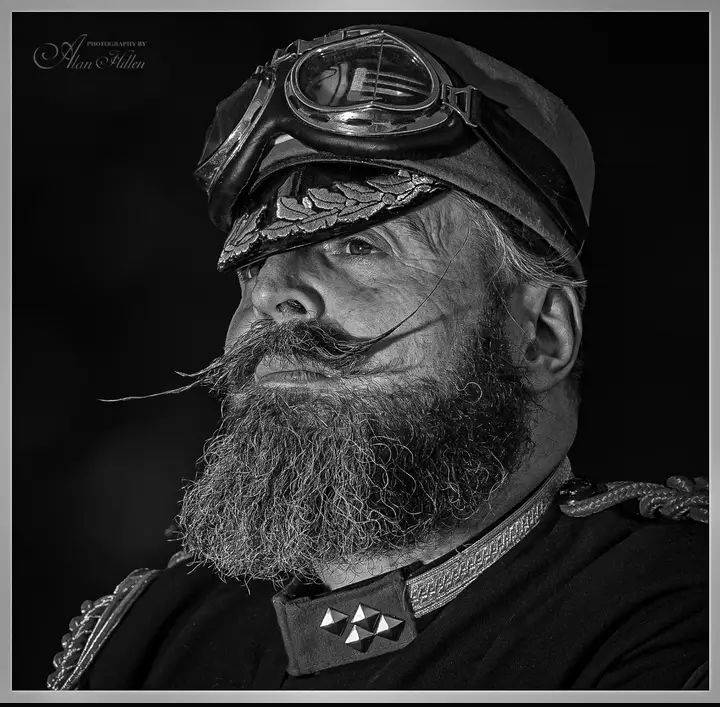
Marcus is one of those rare people who successfully moved to the island by falling out of the sky. Of course we get a few people every year who move permanently to the island by falling out of the sky in a way that might be described as less successful. Unless of course you consider attaining a jam-like appearance to be the height of success.
Marcus came to us during a blood rain. It’s rare in a blood rain to get anything as large as a whole person. Feathers of course are normal, along with frogs, and pieces of things that might have been where all the blood came from. As yet, no one has been able to get Marcus to explain how this happened, but the odds are he doesn’t really know. People who arrive here by more ordinary means are often confused and disorientated by the experience.
Our expert gossips have surmised – based on how Marcus was dressed when we found him – that he might have been some kind of aeronaut in his previous life. He may therefore have been up in the sky for some other purpose and simply collided with whatever was causing the blood rain. There was no sign of an air balloon or other contraption when we found him, but we can’t rule out that having been eaten. The sky can be hungry.
Tracey is a spoonwhisperer. She started this curious practice in childhood, with an uncanny ability to find missing spoons. According to Tracey, when she whispers to the spoons, they often reply. By this means she is able to locate then when they’ve simply fallen into or behind something. It also enables her to find spoon caches in abandoned spoonwalker nests.
Spoonwalkers, as everyone knows, are keen on spoons and like to use them as stilts. They prefer to pick up matching sets, but getting four spoons of equal length and weight is no easy matter. It also doesn’t help that spoonwalkers aren’t terribly good at counting and show now signs of being able to manage a multiplication table. As a consequence, when a spoonwalker lays eggs, it cannot simply multiply the number of eggs by four and thus deduce the number of spoons the offspring will need when they are ready to leave the nest. For this reason, expectant spoonwalkers simply grab all of the spoons they can get, and make a nest with those. It does also give the young spoonwalkers a better hope of finding spoons that make decent sets as they wobble their way out into the wider world. It may well be that spoonwalkers like to keep caches of spoons for future use, or because a spoon hoard has some kind of significance to them.
When a nest is abandoned, rejected spoons may be left behind. Other spoonwalkers may of course find them, unless Tracey gets there first. By this means, Tracey is able to sell spoons back to the spoon-deprived population of the island.
There have been speculations that Tracey is really a spoonwalker whisperer with the uncanny power to get spoonwalkers to steal spoons and bring them back to her for resale. That all seems a bit far-fetched though, especially the idea that anyone could persuade a spoonwalker to relinquish a spoon it had found. On having their spoons removed, spoonwalkers generally set off with a terrible keening noise and will flop around behind you until you give them the spoon back. It really isn’t worth the effort. As Tracey isn’t perpetually hounded by disgruntled spoonwalkers, it seems reasonable to conclude that it really is the spoons she whispers to, although what she says to them, she isn’t prepared to reveal.
No one knows why there are so many horse skulls on the island but no actual horses. Clearly there has been some historical relationship between the appearance of skulls and the absence of living equine creatures, but no one admits to remembering what happened.
A horse skull, devoid of the rest of the horse is rather more menacing than the living version probably suggested. This may well be why said skulls are so popular with demons. It’s a good look.
Islanders tasked with keeping the Mari Lywds for ceremonial purposes have to be adept at dealing with frisky demons. Traditional demon management techniques are passed down through the families. Like the Mari Lywds they inhabit, demons can seldom resist a rhyming battle. Hit them with a challenging couplet and at the very least they’ll feel obliged to think about a witty response. This can give you a critical few seconds to get them back in their bag or subdue them with your holy relic.
Entering a rap battle with a demon is not something to do lightly. Keepers of the Mari Lywds train for years to be able to handle rhyming under extreme pressure. If the demon defeats you, then it may try to eat you, it’s bound to unseat you, with its bones it will beat you…
Gregory O’Regan is Hopeless, Maine’s unburialist. This is a rare calling, but the work is vital. Sometimes people are buried when they should not have been. A well practiced and dedicated unburialist can detect these situations and may be able to act in time to stop the presumed dead person from becoming an actually dead person. Of course, if the unburialist is too late then all that is revealed is horror.
When people have been buried secretively with a view to hiding the body, the keen senses of the unburialist are needed to retrieve the victim. Not that this reliably leads to any kind of justice for the dead, but on the whole we find it helps to at least know that they are dead, and where they have been put.
For these reasons, you may well see Gregory at work on the island, digging for those who should not have been buried. It is best not to approach him when he is working, and best not to ask what he is doing. His ability to tell whether people should not have been buried seems to depend on getting them in the ground first, but if you invite him to the funeral and ply him with good beer, then the processes tends to be smoother and less traumatic all round.
(People who want to be islanders are sending in photos. If you’ve got no other way of contacting us, leave a comment and we’ll email you.)
Sometimes you just have to roll up your sleeves, shove a demon in your blunderbus and do your best to shoot the problem.
Demon Devices are a concept brought to the island by Keith Healing, during the period when he was working on the role play game. The premise is that you can get stuff done by binding a demon to a bit of technology. We now also have an Ominous Folk song about them, written by James Weaselgrease. At present the only way to hear it is as part of the opening section of Anomaly. ANOMALY PART I
Lilly May – as pictured above – is clearly the sort of person to go in for this kind of activity. If you’ve read the graphic novels you’ll be aware of the magical side of what Lilly May gets up to, not least that she’s the person who ends up with Annamarie Nightshade’s familiar – Lamashtu. Lilly May is also an inventor, something you only really see in the chapter covers.
If you’re a Dustcat over on Patreon, you’ll have access to Necessity, which features Lilly May and her demon devices far more thoroughly. https://www.patreon.com/NimueB
At some point we’ll figure out how to get this story, and other new Hopeless tales into your eager little paws. We know you have eager little paws. You probably keep them in a dusty box under the bed, only taking them out on special occasions.
The defining quality of a hermit is that you never see the whole creature. What emerges from the chosen shell may suggest something to you, but inside the shell there is mystery. The hermits do not like to be fully known. They shelter the truth of themselves inside whatever they find that fits.
They aren’t a species. All kinds of creatures can produce the odd hermit here and there. These are the oceanic introverts, the shy entities that do not want anyone to see their posteriors.
For beach scavengers, a hermit on the shore is always a tempting proposition. The shells can make them easier to catch, and it is sometimes a simple business to cook the entire hermit inside whatever they’ve hidden in. Of course it won’t be until you get the hermit out of the shell that you’ll know if they were worth the effort of baking them.
No one jumps from the moon with night potatoes. Not even in the strange hallucinations that are brought on by eating the wrong sort of seaweed during a complex occult rite designed to make you think that you are in fact jumping from the moon.
Even when you go out into the woods on a dark night, compelled to find the moon fruit that appeared to you in a dream, you will not jump from the moon with night potatoes.
If you wake, shivering in the dawn to find yourself on the roof, in the company of a donkey who is probably chewing your clothes, you will not remember night potatoes helping you jump.
They would like you to jump with them, though. It takes them hours to climb trees in straggling groups, their tendrils barely equal to the task of ascending. The lights of their eyes guide them, and might draw attention to their ascent. If you followed them, you could jump with them, but this absolutely never happens.
When the time is right, the night potatoes link tendrils and, under the watchful gaze of the full moon, throw themselves into the sky. If you stand in just the right place and look up, it will seem that they are falling from the moon. They are not. But they do certainly fall. All the way down to the cold, hard ground.
Older and more cynical night potatoes will be there to observe the impact. Eyes are collected for the making of vodka.
As the night potatoes themselves cannot or will not speak, we can only speculate at their motives. There are those who say they do it to placate their own strange gods. There are those who say that night potatoes are evil, and determined to eradicate foolishness and gullibility from their gene pool. Others speculate that it is the urge to jump from the moon that sends them up trees and that they just don’t get physics and have no idea how far away the moon is.
Whatever the truth of it, we can assume that Lovecraft would find them entirely upsetting.
At first, the priority had been simply to have a suitable sacrificial knife. None of the knives in Quentin’s parent’s kitchen had seemed appropriate. They were too small, too mundane, too often used for cutting up root vegetables. Also, they would be missed, and he didn’t fancy having to explain things.
In the search for a suitable knife, he started breaking into abandoned houses. Hopeless was not short of abandoned knives left to gather dust and weird inhabitants in the abandoned drawers of abandoned kitchens in abandoned houses. Really, you could see enough of that to get properly sick of it. Unfortunately, all of those unloved and encrusted knives were the same as the ones his parents kept and had clearly been used for sacrificing somewhat edible things to the mild gods of culinary activity.
Where could a committed cultist get a suitable knife for doing really impressive and powerful sacrifices? There wasn’t a shop for it. The blacksmith threatened him with a hammer when he asked. When he went to cult gatherings, Quentin felt obliged to stay at the back and just watch, all the while hoping the people around him – resplendent with their own, really dramatic sacrificial knives – would assume he had one somewhere under his big cloak.
The big cloak had been made out of a very old sheet, whose once white surfaces had gone a nasty grey despite all attempts at boiling it back into brilliance. As far as Quentin could make out, this was probably how everyone else had sourced the raw material for their ritual attire, too. But the knives were a whole other matter. He wanted one of those knives, with the nasty looking blades. It occurred to him that perhaps the right way to get one was to kill someone who already had a knife, and take theirs. Maybe it was a right of passage. Maybe figuring it out was a test.
For his birthday that year, Quentin’s mum gave him a really large butter knife. It was so blunt that he couldn’t even cut the donkey butter with it. He wondered if she was trying to tell him something.
For a while, Quentin took to following other cultists home. He thought about breaking into their houses and stealing their knives, but his housebreaking skill level turned out to be far too low for actually entering a building. Sometimes, in the early morning light he would go through the midden heaps of other cultists in the hopes one of them would have thrown away a perfectly good sacrificial knife at some point. He found quite a few knives this way – mostly small, bent and/or rusty. Nothing you’d be able to stab anyone with unless they were already a lot more squidgy than the average block of donkey butter his mother made.
Then word got around somehow, and people started giving Quentin their useless, broken knives. The ones that had never held an edge, or had been bent out of shape using them for some unknifelike purpose. The knives no one wanted any more. A pile built up outside the family home, and sometimes, late at night he could hear spoonwalkers going through them in the hopes that in there somewhere, would be a spoon. Once he tried stabbing a spoonwalker with one of the broken, rusty knives. It just stared at him with big, sad eyes as its rubbery flesh indented somewhat under the pressure.
In a fit of desperation, he arranged all of the knives, handle side pressed down into the bare ground outside his home. Then he jumped on top of them. The muddy ground took several extra inches of handle, and Quentin ended up with quite a lot of bruises, but apparently he lacked the knife skill to even significantly scratch himself.
In a final act of wanton desperation, Quentin offered himself up to the Scientific Society on the off-chance there was something properly weird about his relationship with knives. Intensive research followed, during which Quentin discovered that the Scientific Society owned at least as many threatening blades as his cultist brethren. In several cases, these were clearly exactly the same blades, although he had enough sense not to ask about that. Science, it turned out, was no more willing to let him have a sharp implement of his own than religion had been. Science was willing to hit him repeatedly with spoons, and attack him with forks and kept stacking rusty and unusable bits of tableware outside his house.
Islanders are fond of superstition, and willing to adopt anything that might improve their chances of survival. And so it came to pass that making offerings of unusable knives outside Quentin’s house became really popular for the best part of one winter. They got ever sillier – knives made out of wood, out of clay, knitted knives, fabric knives, pictures of knives… It turns out that you really can have far too many sacrificial knives.
The illustration with this post shows me as a crow queen. It’s part of the image we’ve been using this year with The Ominous Folk.
There’s something evocative about the queen of crows, something that speaks to more people than just me. One of the people who has found the idea meaningful is Pauline Pitchford. In the video below, Pauline explores the idea of crow queens from the perspective of a member of The Hopeless, Maine Scientific Society. It’s a beautiful piece, full of magic, possibility and menace.